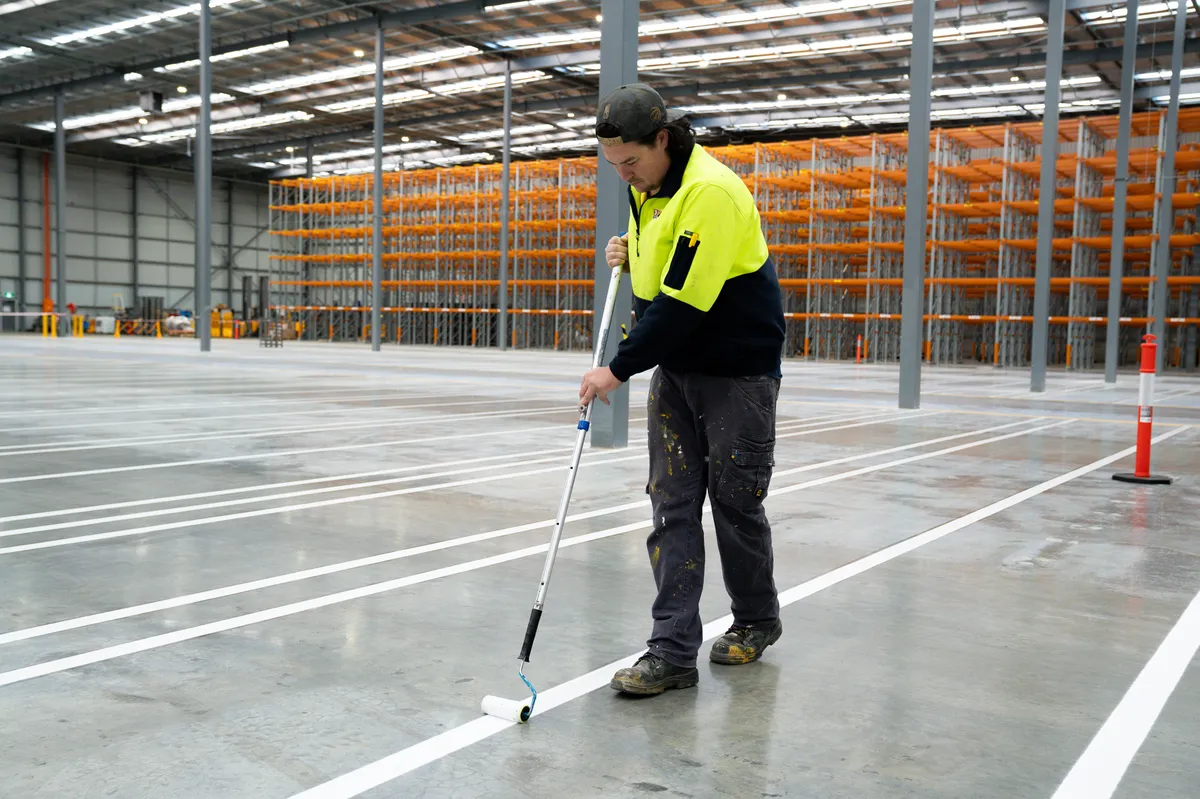
Industrial line marking · VIC / NSW / QLD
Line marking.
Built to perform.
High-performance warehouse, car park and safety marking—planned around live operations and delivered with the backing of Barrier Group.
- After-hours delivery
- Multi-state crews
- Fully insured
What we mark
One contractor for the whole site.
From the loading dock to the staff car park, we make complex sites safer, clearer and easier to operate.
Warehouses & distribution
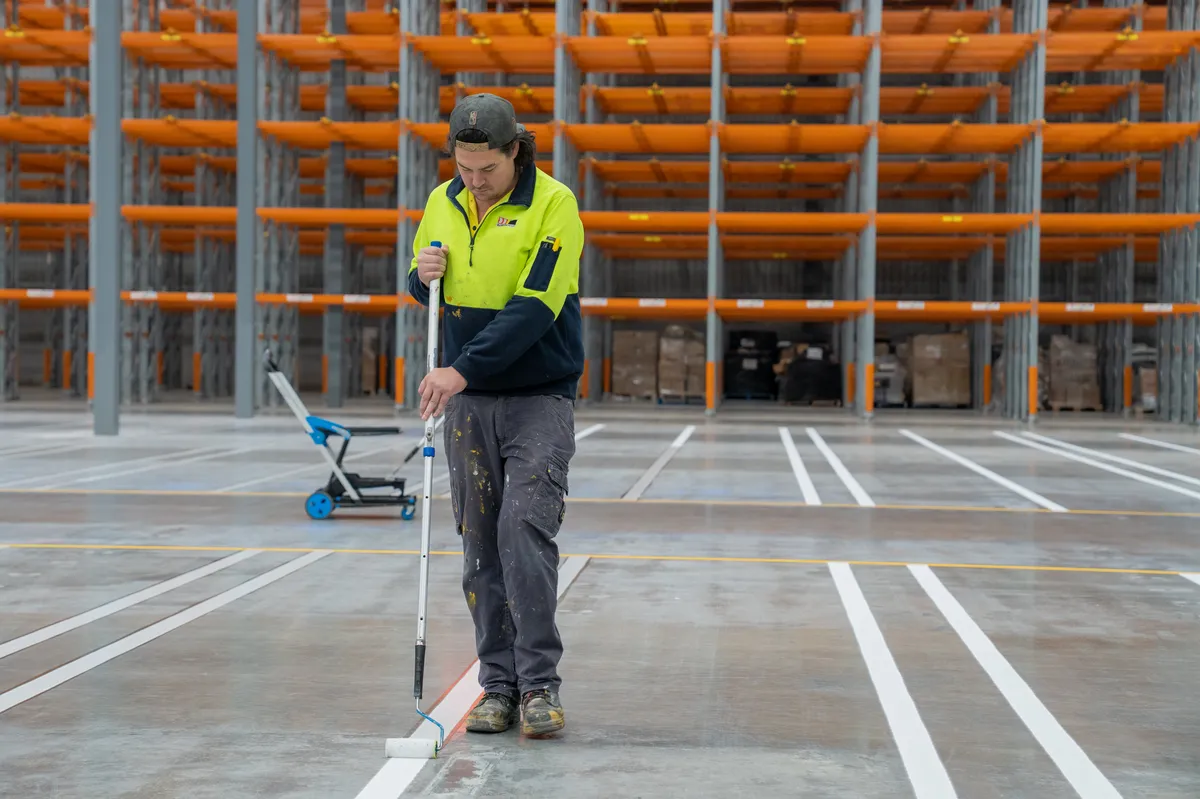
Pedestrian routes, forklift exclusions, pallet bays, staging zones, docks and operational markings.
Explore warehouse marking 02Car parks
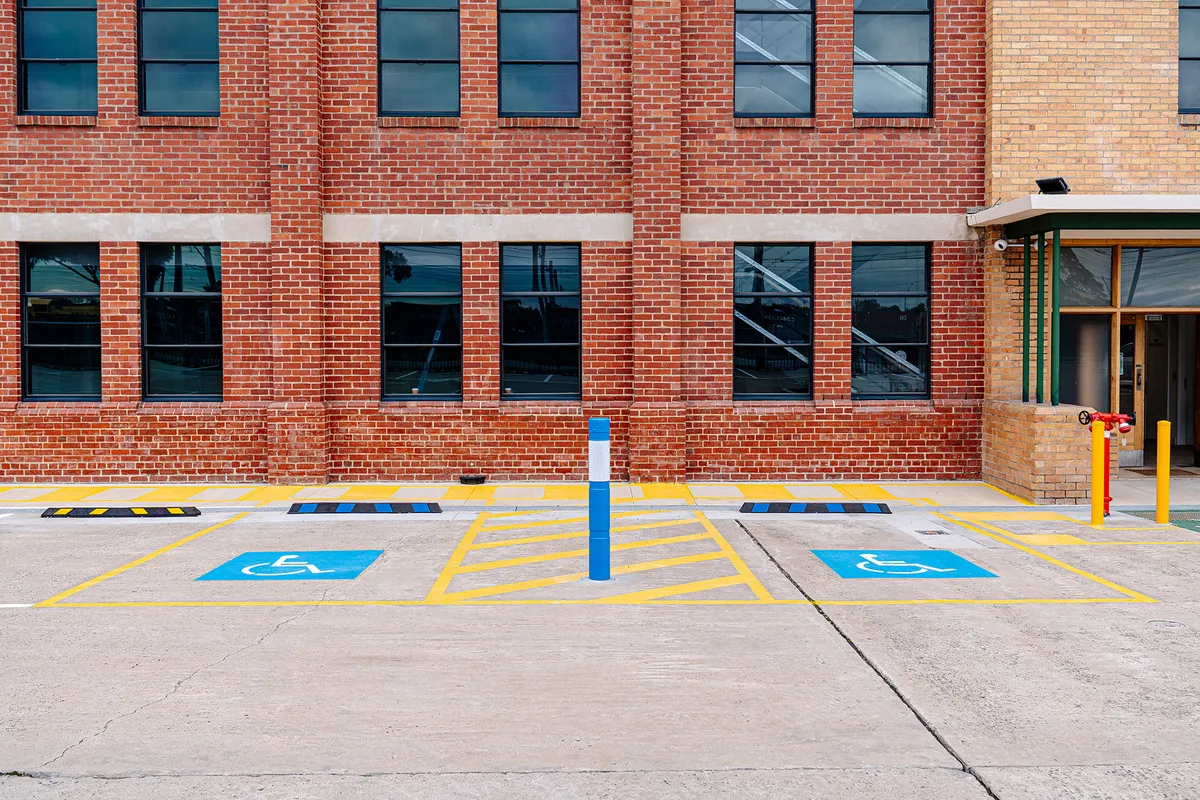
Bays, accessible spaces, arrows, crossings, wheel stops and numbering for new builds and refreshes.
Explore car park marking 03Factories & industrial floors
Durable floor systems for production areas, work cells, storage, hazards and heavy traffic.
Explore floor marking 04Safety walkways & zones
High-visibility pedestrian routes, crossings, hatching and exclusion zones planned for real traffic flows.
Explore safety marking 05Thermoplastic marking
Long-life symbols, crossings, stop bars and traffic guidance for suitable private-site asphalt areas.
Explore thermoplastic 06Removal, reconfiguration & refresh
Grinding, blackout and remarking for layout changes, worn assets and staged refurbishments.
Discuss your site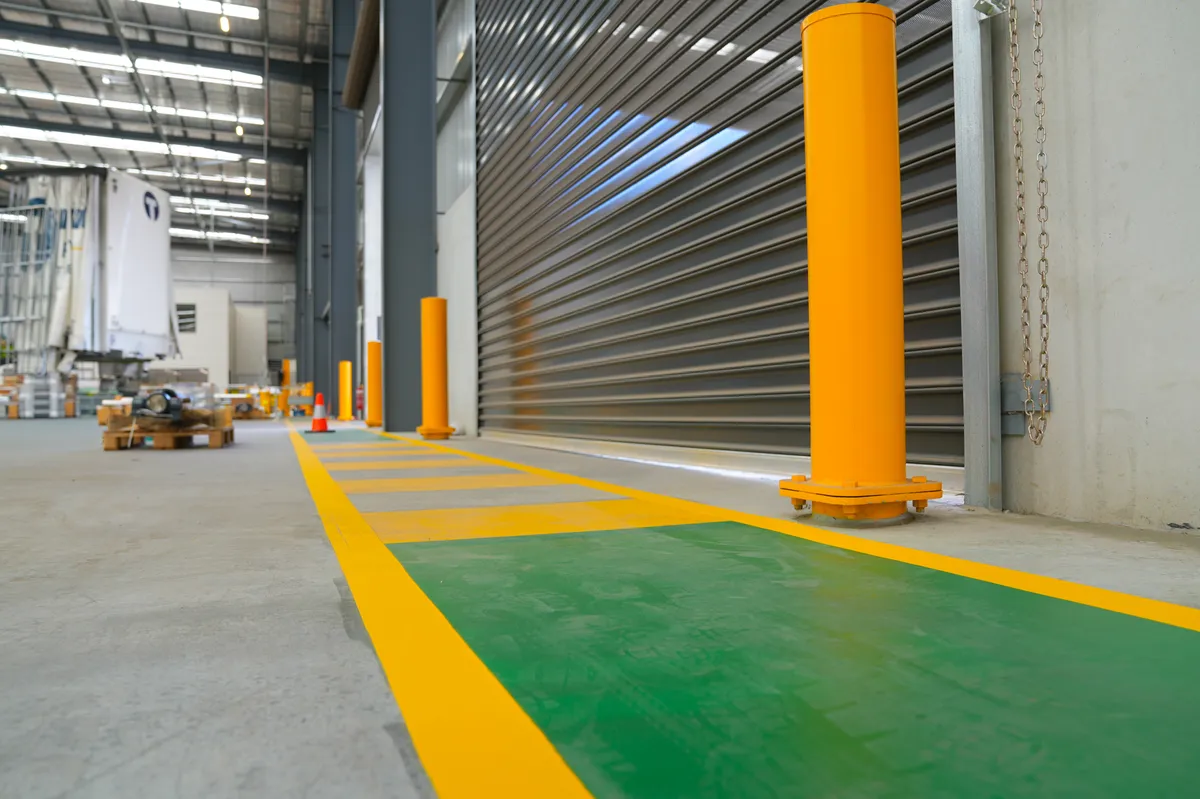
The work speaks in straight lines
Designed for people.
Built for forklifts.
Good line marking is an operational system, not decoration. We consider traffic, substrate, wear, cleaning, cure time and future changes before the first line goes down.
- Environment
- Live industrial site
- Scope
- Walkways, hatching & safety zones
- Delivery
- Staged around operations
The Aus Line method
A clean finish starts long before the paint.
We remove the guesswork from scope, surface preparation and access planning—because those are the things that decide how the job performs.
How we work- 01
Measure & map
We review plans, photos or the site and define the practical scope.
- 02
Specify the system
Surface, traffic and service life guide paint, epoxy or thermoplastic selection.
- 03
Stage the works
Crews, exclusion areas and cure windows are sequenced around operations.
- 04
Prepare, mark & hand over
Accurate set-out, disciplined preparation and a clean, documented finish.
Technical knowledge
Make a better call before you buy.
Plain-English guidance for facility managers, builders and safety teams—from standards and colour selection to lifecycle cost.
Understanding AS 2890 in industrial and commercial environments
What the parking standards cover, what they don’t, and where site-specific judgement matters.
PlanningLine marking cost, lifespan and whole-of-life value
Compare systems on disruption and replacement cycles—not just the first invoice.
MaterialsEpoxy vs thermoplastic: choosing the right system
A practical comparison of substrate, traffic, cure time and expected performance.
Free field toolLine marking inspection checklist
A practical site walk-through for visibility, wear, compliance and maintenance priorities.
Get the checklistNational capability, local delivery
Crews where industry works.
We deliver planned line marking programs across metropolitan and regional Victoria, New South Wales and Queensland.
Start with the site
Show us what needs marking.
Send plans, photos or a rough scope. We’ll help clarify quantities, system, preparation and staging.
Before we mobilise
Useful answers.
Every site is different. These are the questions that most often shape the scope.
Can you work while our site is operating?
Often, yes. We can stage the site, work after hours or align with shutdown windows. Cure times and safe exclusion areas are agreed before mobilisation.
Which line marking material should we use?
It depends on the substrate, traffic, cleaning regime, environment and expected service life. We specify paint, epoxy or thermoplastic against the actual application.
Can you remove or change existing layouts?
Yes. We offer grinding, scraping, blackout and remarking. The appropriate method depends on the old coating and whether appearance, dust or substrate preservation is the priority.
What do you need to quote?
A site address, approximate quantities, photos or plans, surface type and preferred timing are the best start. For complex sites, we can arrange an inspection.