Industrial Floor Line Marking
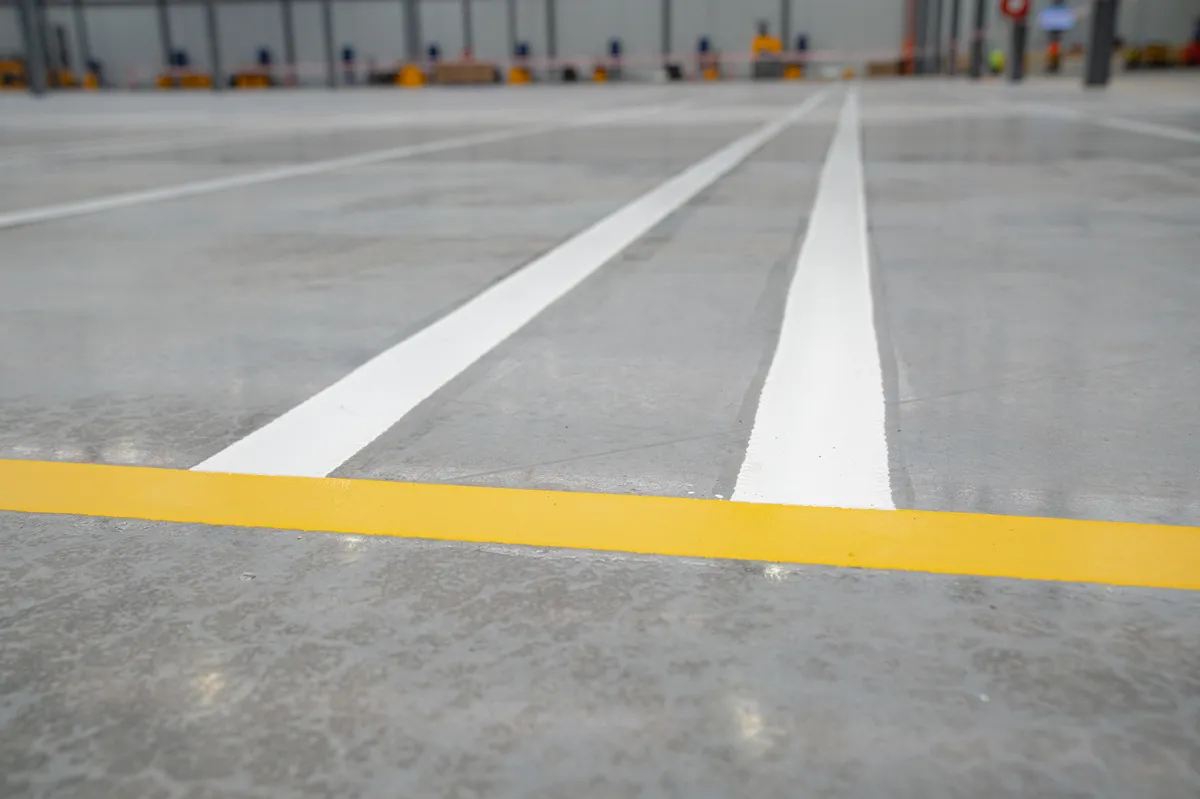
Industrial floors vary widely. Power-trowelled concrete, older porous slabs, sealed floors and existing resin coatings do not accept new markings in the same way. Traffic, cleaning chemicals, heat, moisture and tyre turning also change the durability required.
Assess the substrate
Before selecting paint, inspect for laitance, curing compounds, sealers, oil, moisture, loose coatings and previous line systems. A small adhesion trial can be valuable where the floor history is uncertain. Mechanical preparation may be required to create a clean, sound profile.
Match the system to the duty
Fast-drying single-pack systems can suit lower-impact areas and short shutdown windows. Two-component resin systems may provide greater chemical and wear resistance when the substrate and preparation are suitable. No coating is universally best: repairability, cure time, odour restrictions and future layout changes are part of the choice.
Plan the installation
Confirm the layout, colour legend, line widths and stencils before work begins. Divide operating sites into logical stages and protect each completed area until the coating reaches the required return-to-service condition.
After handover, keep drawings and product records with the maintenance plan. Inspect high-turn areas, crossings and loading approaches more frequently than low-traffic storage zones.
Compare systems in epoxy vs thermoplastic line marking and review concrete preparation fundamentals.