Line Marking Cost, Lifespan and Whole-of-Life Value
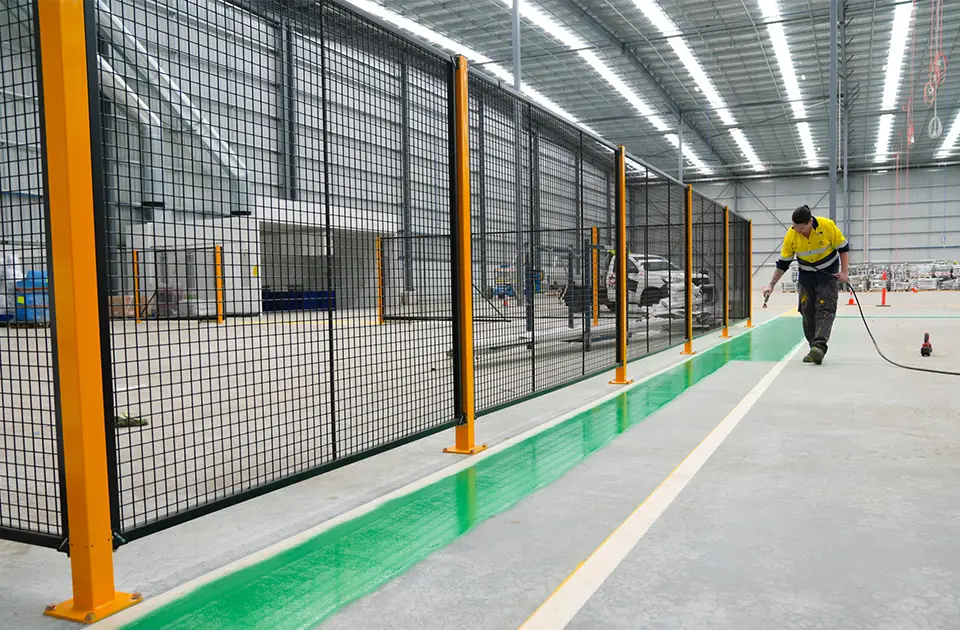
The lowest initial rate per metre is not always the lowest-cost outcome. Preparation, staging, coating choice, cure time and the frequency of future refreshes can outweigh the application price.
What affects project cost
- Quantity, line width, colours, stencils and layout complexity
- Concrete, asphalt, sealed floors or existing coatings
- Cleaning, grinding and removal of obsolete lines
- Day, night, weekend or staged access
- Traffic management and protection of wet work
- Coating system and manufacturer requirements
- Travel, mobilisation and site induction needs
What affects service life
Straight travel lanes generally wear differently from tight turning points. Contamination, weak concrete surfaces, moisture, cleaning chemicals, UV exposure and early trafficking can shorten life. A single lifespan promise without a site assessment is therefore unreliable.
Compare quotations consistently
Ask each contractor to state the preparation method, coating system, assumptions, excluded work, cure or cooling period and how the site will be staged. Compare the expected inspection and repair approach as well as the installation price.
Whole-of-life planning may use a durable system at high-wear points and a more easily changed system in flexible storage areas. It can also schedule inspections so local failures are repaired before large sections need replacement.
For more detail, read how long line marking should last and use the maintenance checklist.