Epoxy vs Thermoplastic Line Marking
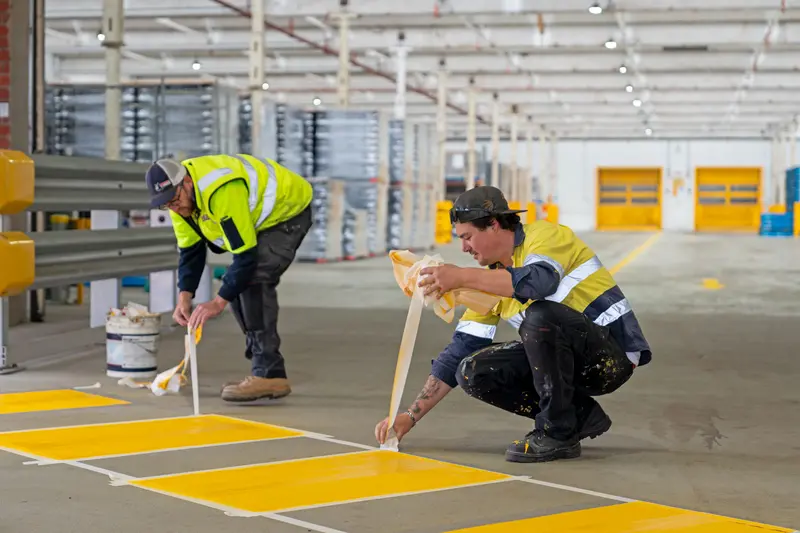
Epoxy and thermoplastic are not interchangeable “premium” upgrades. They cure or bond differently, suit different substrates and create different preparation and maintenance requirements.
Epoxy and other resin floor systems
Two-component epoxy markings are commonly considered for prepared concrete floors where chemical resistance, adhesion and wear performance are important. Results depend heavily on substrate condition, moisture, surface preparation, mixing and cure conditions. Epoxy may not suit every external or UV-exposed application.
Thermoplastic systems
Thermoplastic is commonly used on suitable private-site asphalt and car park surfaces. Heat-applied and preformed products can provide durable, defined markings, symbols and bars. Installation requires compatible pavement, appropriate equipment and a controlled work area.
Decision checklist
Compare:
- Concrete, asphalt or an existing coating
- Straight-line wear versus tight tyre turning
- Internal chemicals, UV, heat and water exposure
- Available preparation and shutdown window
- Required slip characteristics and return-to-service time
- Ease of future removal, repair or layout changes
- Manufacturer requirements and whole-of-life cost
Standard paint may remain the better option where layouts change frequently, access windows are short or traffic is moderate. The correct answer comes from the site conditions, not the product name.
See industrial floor line marking, thermoplastic marking for private sites, and cost and whole-of-life value.